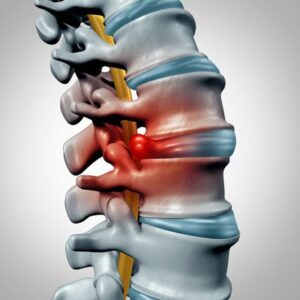
Most of us experience a headache from time to time, but when headaches begin happening regularly, interfering with your day or following the same pattern again and again, you may start to wonder what’s causing them.
Maybe the pain starts near the base of your skull. Your neck feels stiff, and turning your head makes the discomfort worse. Does that mean the headache is coming from your neck? Or could it still be a migraine or tension headache?
The answer isn’t always obvious. Migraines, tension-type headaches and headaches from the neck can share many of the same symptoms. However, there are differences in how they typically feel, what tends to trigger them and which other symptoms occur alongside them. Recognizing those patterns can help you better understand what may be happening and when it is time to seek a professional.
“Headache” Doesn’t Describe One Condition
A headache is a symptom like back pain or dizziness. It tells you what you’re experiencing, but not the why.
Migraine and tension-type headache are separate headache disorders. A headache originating from the neck is known as a cervicogenic headache. It’s possible to experience more than one type as well.
For example, someone who has migraines may separately have neck stiffness or a previous cervical injury. That is why one symptom alone usually cannot provide a reliable answer about what is causing a recurring headache pattern.
Migraine vs. Tension Headache vs. Headache From the Neck
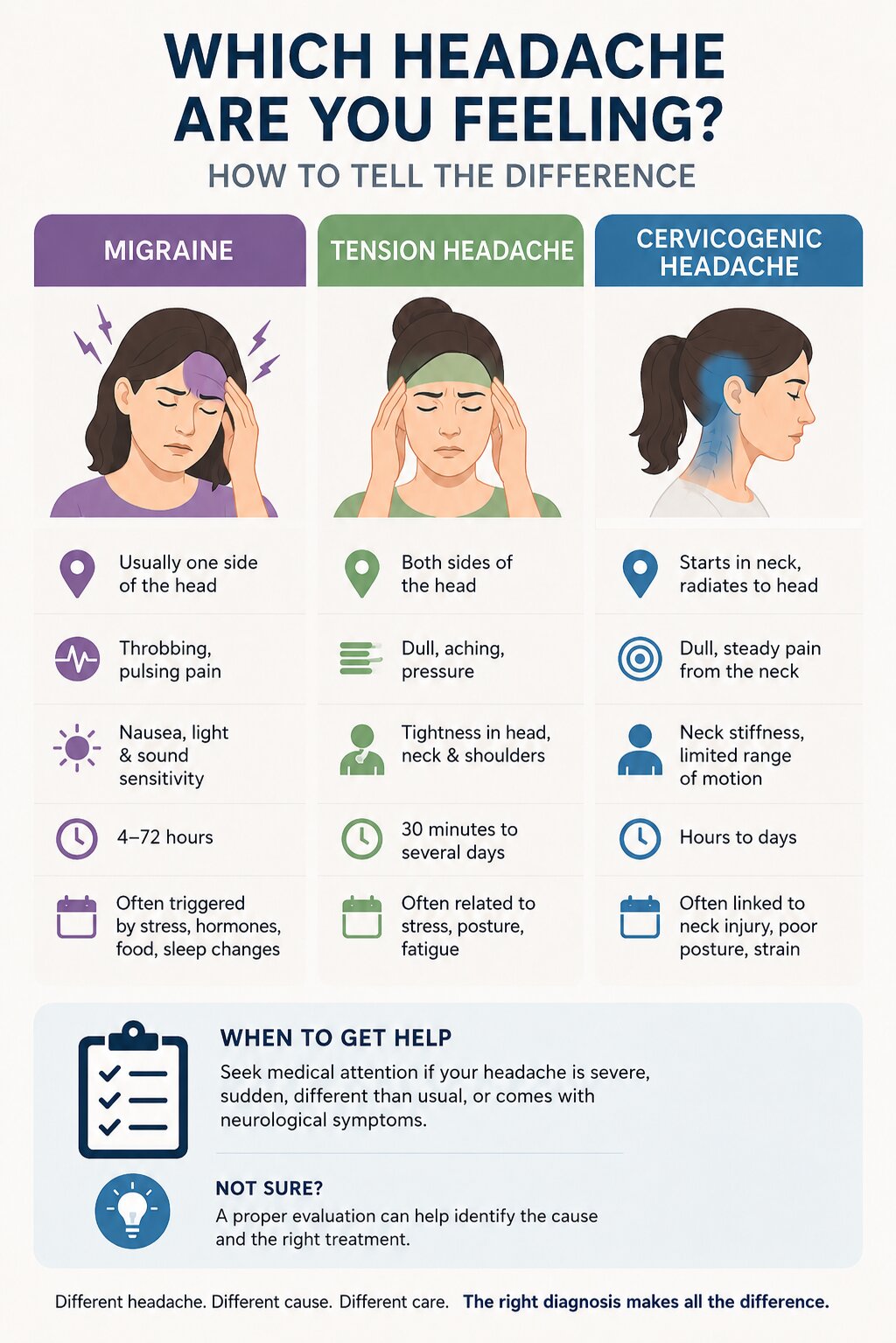
Here’s how migraine, tension-type headaches and headaches from the neck typically compare, which may help you tell the patterns apart or better describe them to a doctor.
| Migraine | Tension Headache | Headache From the Neck | |
|---|---|---|---|
| What it may feel like | Throbbing or pulsing pain | Pressure, tightness or a band around the head | Aching or pressure that may begin near the neck or base of the skull |
| Common location | Often one side, although it can affect both | Often both sides | Frequently one side, beginning near the upper neck |
| Other symptoms | Nausea and sensitivity to light, sound or smells | Tender scalp, neck or shoulders | Neck stiffness, restricted movement or shoulder discomfort |
| Effect of activity | Normal activity may make it worse | Normal activity usually does not make it significantly worse | Certain neck movements or positions may make it worse |
| Important clue | A recurring combination of head pain and migraine symptoms | Pressing pain without prominent migraine symptoms | A consistent connection between the headache and neck movement, position or injury |
What Does a Migraine Feel Like?
A migraine is not just a more painful tension headache It’s a neurological disorder that can produce symptoms throughout the body.
A migraine can involve:
- Throbbing or pulsing head pain
- Moderate or severe pain
- Nausea or vomiting
- Sensitivity to light, sound or smells
- Pain that becomes worse with normal activity
- Visual changes, tingling or speech symptoms known as aura
- Fatigue, difficulty concentrating or mood changes
- Neck pain or stiffness
Not every migraine looks exactly the same. You could have any number of the above symptoms while others are completely absent. Untreated migraine attacks commonly last between 4 and 72 hours, although this can also vary.
How Tension Headaches Differ From Migraines
Tension-type headaches are commonly described as pressure, tightness or a squeezing sensation around the head. The pain is usually mild to moderate and often affects both sides. Unlike migraine, routine activity such as walking or climbing stairs generally doesn’t make it significantly worse.
You may also notice tenderness around your:
- Temples
- Scalp
- Neck
- Upper shoulders
Tension-type headaches usually don’t cause vomiting or the same combination of prominent light and sound sensitivity associated with migraine. However, the symptoms can still overlap, and some people experience both migraine and tension-type headaches.

When a Headache May Be Coming From Your Neck
The medical term for a headache that originates from the neck is cervicogenic headache.
This usually means that something involving the cervical spine or surrounding tissues produces pain that’s felt in the head. This is called referred pain. Because nerves in the upper neck share pathways with nerves that process sensation from the head and face, pain from the neck may sometimes be felt near the temple, forehead or behind the eye.
A neck-related headache may:
- Begin near the upper neck or base of the skull
- Travel toward the side, temple, forehead or area behind the eye
- Affect one side more than the other
- Occur with stiffness or restricted neck movement
- Become worse when you turn or tilt your head
- Be aggravated by holding your neck in one position
- Occur after whiplash, a fall or another neck injury
Neck Pain Doesn’t Always Mean the Neck Caused the Headache
Neck pain and stiffness are common during a migraine. For some people, they begin before the head pain and serve as an early sign that a migraine attack is developing.
Neck discomfort could be part of a migraine, a separate neck problem, a tension-type headache, a headache originating in the cervical spine or more than one headache pattern occurring at different times.
If neck pain or stiffness is a separate problem that keeps improving and then returning, it may also help to understand why recurring neck pain can keep coming back.
Clues that the neck may be contributing can include:
- Pain that consistently begins near the neck or base of the skull
- Headaches that worsen with specific neck movements
- Restricted or painful neck motion
- Symptoms that appear after holding the neck in one position
- A history of whiplash or another neck injury
- The familiar headache being reproduced during a neck examination
None of these signs confirms the cause on its own. An evaluation can help look for the full pattern rather than assume that every headache accompanied by neck pain is a cervicogenic headache.
Everyday Factors That May Influence Headaches and Neck Tension
Daily habits that influence headache symptoms, neck discomfort or both include:
- Screen position: Looking down at a phone or laptop for long periods may place additional stress on the neck. Raising screens closer to eye level and changing positions regularly may help reduce strain.
- Sleep and recovery: Irregular sleep may make migraine attacks more likely for some people, while an uncomfortable pillow or sleeping position may aggravate an existing neck problem.
- Hydration, meals and caffeine: Dehydration, skipped meals and sudden changes in caffeine intake can contribute to headaches. Consistent habits are often more helpful than following one rigid rule.
- Physical and emotional stress: Stress may affect sleep, muscle tension and sensitivity to pain. Walking, movement, breathing exercises and regular breaks may help reduce the overall strain on the body.
- Previous injuries: Whiplash, sports injuries and falls may affect neck movement long after the initial event. Be sure to mention previous injuries during an evaluation, even if they did not seem serious at the time.
These factors don’t necessarily explain the cause of a headache, but they can help reveal patterns worth discussing with a healthcare provider.
What to Track When Headaches Keep Returning
Rest, hydration, heat or ice and medication taken as directed may help during an individual headache episode. When headaches become frequent, change noticeably or interfere with daily life, a broader evaluation can help clarify the headache pattern, identify possible triggers or contributing factors and determine whether additional treatment or referral may be appropriate.
It may be time to look more closely when:
- Headaches are becoming more frequent or intense
- You regularly wake up with head or neck pain
- The same neck position repeatedly brings on symptoms
- Your neck feels stiff or difficult to move
- The headaches began after an injury
- Symptoms interfere with work, sleep or daily activities
- You are relying on pain medication more often
- Your usual headache pattern has noticeably changed
A simple headache diary can help you recognize patterns and give your provider a clearer picture of what you’re experiencing. You can track things like:
- When the headache began and how long it lasted
- Where the pain started and whether it traveled
- What the pain felt like
- How intense it became
- Whether your neck felt stiff or restricted
- Whether neck movement or position affected the pain
- Whether you experienced nausea, visual changes or sensitivity to light or sound
- How you slept
- What you ate and drank
- Medications taken and whether they helped
- Activities, screen use or stressful events before symptoms began
You don’t need to record every detail perfectly. Even a few weeks of consistent notes can help reveal whether your headaches are connected to neck position, daily habits, migraine symptoms or another recurring trigger.
When a Headache Needs Immediate Medical Attention
Most recurring headaches aren’t emergencies, but certain symptoms require prompt medical evaluation rather than a routine chiropractic appointment. Seek immediate care for:
- A sudden, severe headache that reaches maximum intensity quickly
- A headache with new weakness, numbness, difficulty speaking, confusion or loss of consciousness
- A severe headache with fever or pronounced neck stiffness
- A headache following a significant head or neck injury
- New vision loss, seizure or serious difficulty walking
- A new or substantially different headache during pregnancy or shortly after delivery
You should also speak with a medical provider when your headaches are steadily becoming more frequent or severe, begin for the first time after age 50 or occur alongside a history of cancer or a weakened immune system.
The American College of Radiology identifies sudden onset, neurologic deficits, fever, increasing severity, post-traumatic onset, pregnancy-related changes, cancer or immunocompromise and new onset after age 50 among the factors that can warrant additional medical investigation.
How We Evaluate Recurring Headaches at Align Wellness Center
At Align Wellness Center in Northbrook, we evaluate recurring headaches by looking at more than where the pain happens to be located. We want to understand how often your headaches occur, what symptoms come with them, how they affect your daily life and whether your neck may be contributing to the pattern.
One part of our approach is Chiropractic BioPhysics, or CBP. Align Wellness Center uses CBP as a structured method for assessing posture, spinal alignment and movement and, when appropriate, planning rehabilitative care. For patients with recurring headaches, these findings are considered alongside the headache history, neurological findings and physical examination. Posture or imaging findings cannot establish the cause of a headache by themselves.
Your visit may include:
- A conversation about your headache pattern: We will talk through when your headaches began, how often they occur, where the pain starts, how long it lasts and what makes it better or worse.
- A review of related symptoms: We may ask about neck stiffness, restricted movement, nausea, visual symptoms, sensitivity to light or sound and any previous head or neck injuries.
- Orthopedic, neurological and movement testing: These tests help us better understand whether your symptoms may involve joint restriction, muscle tension, nerve irritation, movement limitations or another concern that requires referral.
- 3D BioStructural Analysis: This helps us evaluate posture, spinal structure and movement patterns that may be placing additional stress on the neck and upper back.
- Spinal X-rays when appropriate: Imaging may help us better understand spinal alignment, structural changes or the effects of a previous injury. We consider these findings alongside your symptoms and physical examination rather than relying on imaging alone.
- A personalized care plan: If we believe we can help, we will explain your options. Your plan may include gentle chiropractic adjustments, corrective exercises, spinal traction, posture or ergonomic recommendations, muscle therapies or a combination of approaches.
- Progress checkpoints: Headache patterns can change over time, so we monitor how your pain, neck movement, headache frequency and daily function respond to care.
We also recognize that not every headache is caused by the neck. When your symptoms suggest that a primary-care physician, neurologist or emergency evaluation may be more appropriate, we will help you understand the next step.
If you are experiencing recurring headaches alongside neck stiffness, restricted movement or pain near the base of the skull, call Align Wellness Center at (847) 564-9500 or schedule an appointment online. Our office is located at 666 Dundee Rd #401, Northbrook, IL 60062.
Frequently Asked Questions About Tension Headache, Migraine or Headaches From Your Neck
How can I tell if my headache is coming from my neck?
Your neck may be contributing when the pain consistently begins near the neck or base of the skull, occurs alongside restricted neck movement and can be reproduced or aggravated by particular cervical movements or positions. These clues do not confirm the cause by themselves. A proper examination is needed to determine whether the neck is meaningfully connected to the headache pattern.
Can a migraine begin with neck pain?
Yes. Neck pain or stiffness can happen before, during or after a migraine. For some people, it is actually an early sign that a migraine is developing rather than proof that the headache started in the neck.
Are cervicogenic headaches always one-sided?
They commonly affect one side, but one-sided pain is not required and cannot confirm the diagnosis. Clinicians look for a consistent relationship between the headache and a cervical disorder, including findings such as restricted neck movement or reproduction of the familiar pain during examination.
Can poor posture cause headaches?
Prolonged or uncomfortable positions may aggravate neck discomfort and could contribute to headache symptoms in some people. However, posture is only one possible factor, and a posture measurement alone cannot prove the cause of a headache. Sleep, migraine biology, stress, medication use, previous injuries and other medical factors may also influence the pattern.
Can chiropractic care help with migraine?
Chiropractic care can be an effective treatment option for people experiencing migraines, especially when neck tension, restricted movement, poor spinal mechanics or other physical stressors are contributing to the headache pattern.
At Align Wellness Center, we evaluate the cervical spine, posture and movement to identify these factors and create a personalized care plan designed to reduce recurring symptoms and improve overall function.
Can chiropractic care help a headache coming from the neck?
It may help some people when the headache is connected to stiffness, restricted movement or another physical problem involving the neck. Care may include chiropractic adjustments, exercises, posture guidance or other therapies based on the individual evaluation.
Do I need an X-ray for recurring headaches?
Not everyone with recurring headaches needs an X-ray. We may consider cervical imaging when the history and examination indicate that information about bony structure, degenerative changes or a previous injury would be clinically useful. X-rays do not diagnose migraine or tension-type headache, and findings are always interpreted alongside your symptoms and physical examination.
When should I worry about a headache?
Seek immediate medical attention for a sudden, severe headache or a headache accompanied by symptoms such as weakness, numbness, difficulty speaking, confusion, seizure, vision changes, fever with significant neck stiffness, or loss of consciousness.
A severe headache following a significant head or neck injury should also be evaluated promptly. You should also talk with a medical provider if your headaches are becoming more frequent or severe, noticeably change from your usual pattern, or begin for the first time after age 50.
 (847) 564-9500