What is Sciatica?
If pain is running from your lower back into your buttock, hip, or leg, you may be dealing with sciatica. For some people, it feels sharp or electric. For others, it may feel like burning, tingling, numbness, or weakness that travels down one side of the body.
At Align Wellness Center in Northbrook, we look beyond the symptom pattern to better understand what may be contributing to your sciatic nerve pain. In some cases, sciatica may be related to disc issues, spinal alignment, spinal stenosis, posture, muscle irritation, pelvic imbalance, or another structural factor.
This article explains what sciatica actually is, how it differs from general lower back pain, the most common structural causes, and how a corrective chiropractic evaluation can help identify what may be contributing to your symptoms.
What Sciatica Actually Is
Sciatica is not always a diagnosis by itself. It is often a symptom pattern that happens when something irritates or compresses a nerve connected to the sciatic nerve pathway.
The sciatic nerve is the largest nerve in the body. It runs from the lower back through the buttock and down the back of the leg. When that nerve or one of the nerve roots connected to it becomes irritated, pain can travel away from the lower back and into the buttock, hip, leg, calf, foot, or toes.
That is why the most important question is not just, “Do I have sciatica?” It is, “What is causing the nerve irritation in the first place?”
Sciatica vs. Normal Lower Back Pain: What’s the Difference?
Lower back pain and sciatica can feel similar, but they are not always the same thing. Regular lower back pain usually stays in the back. It may feel like soreness, stiffness, tightness, or aching across your lower back, hips, or pelvis.
Sciatica, on the other hand, usually involves nerve-related pain that travels away from the lower back and into the buttock, hip, leg, calf, foot, or toes.
Sciatica may feel:
- Sharp
- Burning
- Electric
- Shooting
- Numb
- Tingly
- Weakness or heavy in the leg
For some people, the pain starts in the lower back and travels down one side of the body. For others, the leg pain, numbness, or tingling may be more noticeable than the back pain itself.
However, not every pain that goes into the leg is automatically sciatica. Leg pain can also come from the hips, muscles, joints, posture issues or other nerve-related problems. That is why getting examined matters. At Align Wellness Center, we look at your symptoms, posture, movement and spinal structure to better understand what may be causing the pain instead of guessing based on symptoms alone.
Common Causes of Sciatica
Sciatica can develop for different reasons. In many cases, symptoms are related to pressure or irritation affecting nerves in the lower back, pelvis, or buttock area. This may happen because of disc problems, spinal narrowing, bone spurs, muscle irritation, posture-related stress, injury, or other structural changes. Certain things can cause your risk factors for developing sciatica symptoms to increase such as:
- Age
- Prolonged sitting
- Obesity
- Occupation
While a herniated disk is the most common cause of sciatica, there are several spinal disorders that can also cause sciatic nerve compression.

Herniated or Bulging Disc
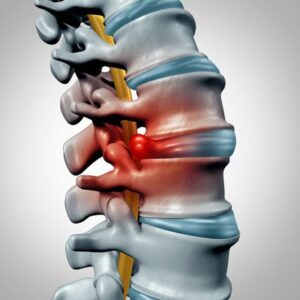
One of the most common reasons sciatica happens is because of a bulging or herniated disc in the lower back.
The discs in your spine act like cushions between the bones of your spine. When one of those discs bulges out of place or becomes irritated, it can put pressure on a nearby nerve. If that nerve is connected to the sciatic nerve pathway, the pain may travel from your lower back into your buttock, hip, leg, calf or foot.
This type of sciatica may feel sharp, shooting, burning, numb or tingly. Some people also notice weakness in the leg or foot.
Disc-related sciatica may feel worse when you:
- Sit for long periods
- Bend forward
- Lift something
- Twist the wrong way
- Cough or sneeze
- Drive for a long time
The important thing to know is that the disc itself may not be the only issue. Alignment, posture, inflammation, movement patterns and pressure on the nerve can all play a role. That is why an exam is important before deciding what kind of care may be appropriate.
Spinal Stenosis
Spinal stenosis happens when the space inside the spine becomes more narrow than it should be. When there is less room around the nerves, those nerves can become irritated or compressed.
If the narrowing happens in the lower back, it may contribute to sciatica symptoms that travel into the buttock, hip, leg, calf, or foot.
Spinal stenosis may cause symptoms such as:
- Lower back pain
- Pain that travels into the leg
- Numbness or tingling
- Heavy feeling in the legs
- Weakness
- Pain that feels worse when standing or walking for long periods
Some people with spinal stenosis feel better when they sit down or bend forward slightly, while others notice symptoms during daily activities like walking, standing or going up and down stairs. Since spinal stenosis can overlap with disc problems, arthritis, posture changes or age-related changes in the spine it’s important to understand what may be contributing to the nerve irritation.
Degenerative Disc Disease
Degenerative disc disease is another possible reason someone may develop sciatica symptoms.
The discs in your spine act like cushions between the bones of your spine. Over time, those discs can lose some of their height, flexibility and cushioning. When that happens, the space around the nerves in the lower back can change.
Degenerative disc disease may contribute to sciatica when it leads to:
- Less space around the nerves
- More pressure in the lower back
- Irritation near the nerve roots
- Changes in posture or movement
- Overlap with other issues, such as spinal stenosis or arthritis
For some people, this can create pain, tingling, numbness or weakness that travels into the buttock, hip, leg, calf or foot.
Because degenerative disc issues can overlap with other lower back problems, it is important to look at the full picture instead of assuming every case of sciatica has the same cause.
Piriformis Syndrome
The piriformis is a small muscle deep in the buttock. The sciatic nerve runs very close to this muscle, and for some people, it may even run through it. If the piriformis muscle becomes tight, irritated, or inflamed, it can put pressure on the sciatic nerve.
When this happens, the pain may feel very similar to sciatica caused by a disc problem. It can cause symptoms such as:
- Pain deep in the buttock
- Pain that travels down the back of the thigh
- Numbness or tingling in the leg
- Pain that gets worse after sitting for a long time
- Pain while walking, climbing stairs, or going uphill
- Reduced hip or leg mobility
Piriformis syndrome is important to consider because it doesn’t always start in the spine. The pain may still travel down the leg, but the irritation may be coming from the muscle instead of a herniated disc or spinal narrowing.
Other Possible Causes of Sciatic Nerve Pain
While disc issues, spinal stenosis, degenerative disc disease and piriformis syndrome are common reasons sciatica symptoms can develop, they are not the only possibilities. Sciatic nerve pain can also be related to other structural issues, injuries or changes in the lower back and pelvis that place stress on nearby nerves.
Spondylolisthesis
Spondylolisthesis happens when one vertebra slips forward over the bone below it. This most often affects the lower back.
When a vertebra shifts out of place, it can narrow the space around nearby nerves. If those nerves become irritated or compressed, it may lead to lower back pain, leg pain, numbness, tingling, or other sciatica-like symptoms.
Beyond being born with, or developing spondylolisthesis in childhood, it can be caused by:
- Wear and tear in the spine
- A previous fracture or stress injury
- Repetitive strain from certain sports or activities
- Trauma, such as a fall or accident
- Developmental spine changes that started earlier in life
Trauma or Injury
Some physical traumas can directly cause sciatica such as motor vehicle accidents, falls, and contact sports like football. The impact may injure the nerves themselves or fragments of broken bone may compress the nerves. Other forms of trauma that can be a cause of sciatica include:
- Pelvic fracture or hip dislocation
- Direct injury to the lower back, pelvis, hip or surrounding nerves|
Why Sitting, Driving, and Poor Posture Can Make Sciatica Worse
A lot of people with sciatica notice similar issues. They feel worse after sitting too long, driving, working at a desk or staying in one position.
That can happen because sitting puts more pressure on your lower back, hips, pelvis and discs. If a nerve is already irritated, that extra pressure can make the pain feel sharper, stronger, or more noticeable.
You may notice symptoms get worse after:
- Sitting at a desk for a long time
- Driving or riding in the car
- Slouching on the couch
- Sitting with your wallet or phone in your back pocket
- Leaning to one side while sitting
- Sitting with your hips tucked under you
- Going from sitting to standing
- Spending most of the day without much movement
Posture can also play a role, but that doesn’t mean poor posture is always the main cause of sciatica. However, for some people, the way they sit, stand, move or hold their pelvis can add extra stress to the lower back and sciatic nerve area.
Over time, these stress patterns may make sciatica symptoms flare up more often or stick around longer.
That is why it helps to look at more than just where the pain is. A full evaluation can help show whether your posture, spinal alignment, pelvic position, daily habits, or movement patterns may be adding to the problem.
How Align Wellness Center Evaluates Sciatica
Because sciatica can come from different issues, the first step is figuring out what may be irritating the nerve. The pain may feel similar from person to person, but the cause is not always the same.
At Align Wellness Center, we do not want to guess based only on where the pain is. We take time to look at your symptoms, posture, spinal structure, movement, and overall biomechanics so we can better understand what may be contributing to your sciatic nerve pain.
Your evaluation may include:
- A detailed symptom and health history
- A digital posture exam
- A 3-Dimensional posture exam
- Chiropractic, neurological, and physical exam findings
- Spinal radiographs, if clinically appropriate
- Digital biomechanical analysis
- A review of findings
- Recommended next steps based on your results
This process helps us better understand whether your symptoms may be related to a disc issue, spinal stenosis, posture, pelvic positioning, muscle irritation, spinal alignment, or another structural factor.
After your exam, we will review what we found, explain whether we believe we can help, and walk you through the next best step for your situation.
Corrective Chiropractic Care vs. Temporary Pain Relief
When sciatica flares up, it is natural to want fast relief. Pain, tingling, numbness or burning down the leg can make it hard to sit, drive, sleep, work or move comfortably.
Some treatments focus mainly on calming symptoms in the short term. That can be helpful, especially when pain is intense. However, if the same symptoms keep coming back, it may be a sign that there are deeper structural issues that need to be evaluated.
Corrective chiropractic care looks at more than just where it hurts. It looks at how the spine, pelvis, posture and movement patterns may be placing stress on the nerves in the lower back and sciatic nerve pathway.
At Align Wellness Center, our approach is based on understanding what may be contributing to the nerve irritation before recommending care. Depending on your exam findings, corrective chiropractic care may help address structural factors that can contribute to sciatica symptoms.
Align Wellness Center uses Chiropractic BioPhysics, also known as CBP, as part of its corrective chiropractic approach. CBP focuses on evaluating posture, spinal alignment and biomechanics to better understand how structural patterns may be affecting the body.
Every case of sciatica doesn’t have the same cause or need the same treatment. The goal is to create a care plan based on what your evaluation shows, not just a one-size-fits-all adjustment.
What Sciatica Treatment May Include at Align Wellness Center
After your evaluation, your recommended care will depend on what appears to be contributing to your sciatic nerve pain. Since sciatica can be related to different issues, treatment won’t look exactly the same for every patient.
At Align Wellness Center, sciatica care may include a combination of therapies designed to reduce stress on irritated structures, support better spinal alignment, improve movement, and help your body function more comfortably.
Depending on your exam findings, your care plan may include:
- Corrective chiropractic care
- Spinal decompression
- Spinal remodeling
- SoftWave therapy
- Posture and movement recommendations
- Individualized care planning
- Progress checks to monitor how your body is responding
Our goal is to personalize your care plan based on what your exam shows and adjust recommendations based on how your body responds.
Spinal decompression may be recommended when disc-related irritation appears to be part of the problem. This therapy is designed to help reduce pressure on irritated spinal structures.
SoftWave therapy may also be recommended in some cases to support the body’s natural healing response and help with pain, inflammation, and tissue irritation.
When Sciatica May Need Medical or Surgical Evaluation
Many cases of sciatica can be evaluated through conservative care, but some symptoms should be taken seriously right away. You should seek medical care as soon as possible if you have sciatica symptoms along with:
- Severe or worsening leg weakness
- Numbness in the groin or saddle area
- Loss of bowel or bladder control
- Trouble walking or standing because of weakness
- Pain after a major fall, car accident, or injury
- Symptoms that are getting worse instead of improving
- Severe pain that does not let up
These symptoms may point to something more serious that needs medical evaluation. Chiropractic care may be appropriate for many people with sciatica, but it is not the right first step for every situation.
If your symptoms are severe, sudden or connected to loss of control, major weakness or trauma, it is important to get medical help right away.
Sciatica Treatment in Northbrook, IL
If sciatica is making it hard to sit, drive, sleep, work, or move comfortably, it may be time to take a closer look at what is causing the nerve irritation.
At Align Wellness Center in Northbrook, we help patients better understand their sciatica symptoms through a corrective chiropractic evaluation and personalized care recommendations. Rather than guessing based only on where the pain is, we look at your symptoms, posture, spinal structure, movement patterns, and exam findings to determine what may be contributing to the problem and come up with a personalized sciatica treatment plan.
If you are dealing with lower back pain, buttock pain, leg pain, numbness, tingling, or weakness that will not go away, call Align Wellness Center at (847) 564-9500 or schedule an appointment online. Our office is located at 666 Dundee Rd #401 Northbrook, IL 60062.
You can also download our free 5-step guide to getting a better night’s sleep with sciatica for helpful tips while you decide on your next step.
Frequently Asked Questions About Sciatica
What is the most common cause of sciatica?
A herniated or bulging disc is one of the most common causes of sciatica. When a disc irritates or puts pressure on a nearby nerve, pain can travel into the buttock, hip, leg, calf or foot.
How do I know if my lower back pain is sciatica?
Lower back pain usually stays in the back. Sciatica usually travels into the buttock, hip, leg, calf, foot or toes. It may feel sharp, burning, electric, numb, tingly or weak down one side of the body.
Is sciatica always caused by a herniated disc?
No, a herniated or bulging disc is common, but sciatica can also be related to spinal stenosis, degenerative disc changes, piriformis syndrome, spondylolisthesis, posture issues or injury.
Why does sitting make sciatica worse?
Sitting can place more pressure on the lower back, hips, pelvis and discs. If a nerve is already irritated, that added pressure may make pain, tingling, burning or numbness feel worse.
Can poor posture contribute to sciatica?
Yes, it can for some people. Poor posture may add stress to the lower back, pelvis and sciatic nerve area, especially when combined with long periods of sitting or limited movement.
Can a chiropractor help with sciatica?
A chiropractor may help, depending on what is causing the nerve irritation. At Align Wellness Center, we start with an evaluation to better understand what may be contributing to your symptoms before recommending care.
What happens during a sciatica exam at Align Wellness Center?
Your exam may include a symptom history, posture evaluation, 3-Dimensional posture exam, chiropractic, neurological and physical exam findings, spinal radiographs if needed and digital biomechanical analysis.
When should I worry about sciatic nerve pain?
Seek medical care right away if you have severe or worsening leg weakness, numbness in the groin area, loss of bowel or bladder control, trouble walking, pain after major trauma or symptoms that keep getting worse.
 (847) 564-9500