Most people first think about visiting a chiropractor because something hurts. Maybe your back went out, your neck has been bothering you for weeks or an old injury has started acting up again.
The first goal is usually simple: you want to feel better. However, what happens when the pain improves but then keeps coming back?
That’s where corrective chiropractic care takes a broader look. Instead of focusing only on how you feel during one flare-up, corrective care looks at other factors that could be contributing to the problem, such as movement, posture, spinal mechanics, previous injuries, strength and the demands you place on your body every day.
How Symptom Relief and Corrective Care Work Together
Getting out of pain is important. If your neck or back hurts, being able to move more comfortably, sleep better or simply get through your workday can make a big difference in your quality of life.
Pain is usually only one piece of information. You can feel better while still having:
- Limited movement in part of the neck or back
- Weakness or poor endurance in supporting muscles
- Difficulty returning to certain activities
- A recurring movement pattern that aggravates the same area
- Lingering effects from a previous injury
- Posture or spinal mechanics that may be adding stress in certain situations
Short-term care asks: How can we calm this flare-up?
Corrective care also asks: Why might this keep happening, and is there something we can address to reduce the likelihood of repeating the same cycle?
What Corrective Care Looks at Beyond Pain
Corrective care shouldn’t begin with the assumption that everyone needs the same adjustment, exercise or treatment schedule. At Align Wellness Center, we first want to understand what’s actually going on for you.
An evaluation may include:
- Your symptom history: Where does it hurt? When did it start? What makes it better or worse? Does the pain stay in one place or travel?
- Previous injuries: Car accidents, falls, sports injuries, surgeries and older problems may still provide useful context.
- Posture and movement: We look at how comfortably different areas move and whether certain positions or movements reproduce your symptoms.
- Orthopedic and neurological testing: These tests can help identify movement restrictions, weakness, possible nerve involvement and other relevant findings.
- 3D BioStructural Analysis: Our comprehensive initial evaluation process, which brings together your symptom history, posture assessments, orthopedic and neurological examination, and any imaging that is clinically appropriate.
- Imaging when appropriate: X-rays may be used when they can provide useful information about spinal structure, alignment, degeneration or previous injury.
Each person is different. We consider the findings as a whole, alongside your symptoms, history and physical examination before recommending care.
Chiropractic BioPhysics and the Corrective Care Approach
One of the approaches used at Align Wellness Center is Chiropractic BioPhysics, or CBP. This is a specific chiropractic technique focused on assessing posture and spinal alignment and, when appropriate, using targeted adjustments, postural exercises and traction as part of a treatment plan.
At our clinic, CBP is considered alongside the patient’s symptoms, physical examination, movement, function and goals. Not every patient needs CBP-specific treatment, and identifying a difference in spinal alignment does not automatically mean that correcting it will resolve someone’s symptoms.
Depending on what we find, a plan could include:
- Chiropractic adjustments: Used to improve movement in joints that feel restricted or are not moving comfortably.
- Corrective exercises and rehabilitation: Designed to improve strength, mobility, endurance and movement patterns that may be contributing to the problem.
- Spinal traction: Used in some cases to address specific spinal or postural findings as part of a broader corrective-care plan.
- Movement and ergonomic recommendations: Helpful when things like desk work, screen position, lifting or other daily habits repeatedly aggravate the same area.
These different approaches may be used individually or together depending on what we’re trying to address.
One X-Ray or Posture Finding Can’t Tell the Whole Story
It is easy to look at an X-ray or posture photo and assume that anything that appears different must be the reason you hurt, but the human body is more complicated than that.
Two people can have similar posture and completely different symptoms. Likewise, someone may have changes visible on an X-ray without those changes being the main reason they came into the office.
We consider structural findings alongside questions such as:
- Does this finding match where you are experiencing symptoms?
- Is your movement restricted?
- Does a certain position consistently reproduce the problem?
- Is the problem limiting something you need or want to do?
This helps us determine which findings actually matter for your specific symptoms and function.
Corrective Care for Different Types of Pain
There is no single “corrective chiropractic treatment”, because what we recommend depends on why you came in and what we find during the evaluation.
For example:
- Recurring neck pain: We may look at cervical movement, posture, previous injuries, muscle function and the amount of time you spend in sustained positions.
- Headaches with neck symptoms: We may evaluate whether neck stiffness, movement or certain positions consistently occur alongside the headache pattern.
- Lower back pain: The evaluation may focus on spinal movement, daily activity, strength, previous injuries and other factors that repeatedly aggravate the lower back.
- Sciatica or pain traveling into the leg: Neurological findings, nerve symptoms, movement and possible disc involvement become particularly important.
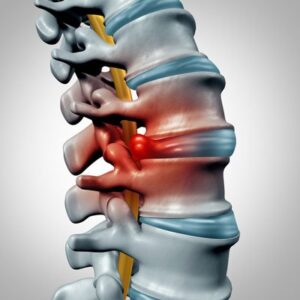
- Disc-related symptoms: Care may take into account imaging, neurological findings, movement tolerance and which activities increase or reduce symptoms.
In some cases, chiropractic care may be only one part of the solution. If your examination suggests that another healthcare provider or type of care would be more appropriate, we can help you understand the next step.
Measuring Progress During Corrective Care
Feeling better is important, but it’s not the only way we measure progress.
Depending on why you came in, we may look at changes in:
- Pain frequency or intensity
- Range of motion
- Strength or endurance
- Numbness, tingling or other nerve symptoms
- Ability to work or exercise comfortably
- Sleep and daily function
- Tolerance for activities that previously triggered symptoms
- Posture, movement or other measurable findings relevant to your care plan
We use progress checkpoints to see what’s improving, what is not and whether the plan needs to change. Your care plan may also change as you improve or as we learn more about how your body responds.
Care After Your Symptoms Improve
After you start feeling better, what happens next depends on your goals and progress.
For some patients, the next phase may involve continuing rehabilitation or corrective work after the initial pain improves. Others may transition to less frequent supportive or maintenance care. Some may complete care and return only if a new problem develops.
The important part is that the decision is based on how you are doing and what you are trying to accomplish, rather than following the same schedule indefinitely.
Corrective Chiropractic Care at Align Wellness Center
At Align Wellness Center in Northbrook, we want to understand more than where you happen to hurt today.
We look at your symptoms, history, movement, posture, spinal mechanics and any relevant findings to determine what may be contributing to the problem you’re facing and which type of care makes sense for you.
If we believe corrective chiropractic care is appropriate for you, we will explain:
- What we found during your evaluation
- Which findings we believe are relevant
- What we recommend addressing
- Which therapies may be included
- What we will monitor as care progresses
- When we will reassess your progress
Your plan may include chiropractic adjustments, Chiropractic BioPhysics, corrective exercises, spinal traction, rehabilitation, ergonomic recommendations or other supportive therapies based on your individual needs.
If you’re tired of repeatedly treating the same flare-up without understanding why it keeps returning, call Align Wellness Center at (847) 564-9500 or schedule an appointment online. Our office is located at 666 Dundee Rd #401, Northbrook, IL 60062.
The Corrective Chiropractic Care Difference
Corrective chiropractic care is a specialty that some chiropractors choose to pursue – including myself at Northbrook Chiropractic Center. In my opinion, it’s a much better form of chiropractic care because it aims to correct the structure of the spine, and address the root cause of pain and health problems long-term.
That’s because instead of constantly adjusting the patient’s spine every few days for temporary pain or symptom relief, corrective chiropractic care actually aims to reshape the spine to its optimal shape, and hold the vertebrae in alignment long-term.
Why Corrective Care Should Be Your Choice
As the name implies, “corrective” refers to the correction of the spinal structure. As you are probably aware, almost all of us are either spending too much time behind our computers at work, looking down at our cell phones every two minutes, laying on the sofa binge watching an entire season of whatever, or leaning sideways in gridlock traffic day in and day out.
Over time, our poor postural habits, combined with past injuries change the shape of our spine. Heads get shifted forward, necks lose their natural curves, and spines get twisted out of place just to handle all the new forces being exerted on it.
Corrective chiropractic doctors specializing in Chiropractic BioPhysics first examine your spine, then take x-rays to see how your spine is stacking up. Using postural assessment software, they are able to measure just how much correction needs to be made, and create a custom treatment plan to get you not only out of pain, but an optimal spine.
I won’t lie… a spine that was neglected for years or decades, will take months to reshape. During the rehabilitation process, your spine is adjusted to take you out of pain. Then, through postural exercises and mirror image adjustments and traction, your spine is slowly molded back to its healthy and strong shape.
There is absolutely no pain or discomfort involved in this process. Patients at my Northbrook Chiropractic Clinic report a wide range of symptoms dissipating in their first few weeks of corrective chiropractic care. Usually back pain and neck pain start dissipating, then headaches and migraines. Before long, other diseases such as acid reflux, allergies, or asthma start to clear up. Why? Because healing nerve energy is not flowing to those vital organs without interruption!
If you or a loved on in Northbrook or surrounding areas are experiencing back pain, neck pain, headaches, migraines, disease, fatigue, or any other health issues and want to give corrective chiropractic care a try, please contact our office for an appointment.
Frequently Asked Questions About Corrective Chiropractic Care
What is corrective chiropractic care?
Corrective chiropractic care looks beyond short-term pain relief to identify movement, posture, spinal or other physical factors that may be contributing to a recurring problem. Care plans are then based on the findings that are relevant to the individual patient.
Is corrective chiropractic different from a regular adjustment?
An adjustment may be one part of corrective care, but a corrective plan may also include exercises, rehabilitation, traction, movement recommendations and progress measurements depending on what the patient needs.
What is Chiropractic BioPhysics?
Chiropractic BioPhysics, or CBP, is a chiropractic approach that considers spinal structure, posture and movement as part of the evaluation and care plan. At Align Wellness Center, CBP may be combined with adjustments, exercises, traction and other therapies when appropriate.
Does corrective chiropractic care always require X-rays?
No. Imaging is used when it is clinically appropriate and likely to provide information that affects the evaluation or care plan. An X-ray is only one source of information and is considered alongside your symptoms and physical examination.
Why would I need exercises if I am already getting adjusted?
Adjustments and exercise have different purposes. An adjustment may help improve joint movement, while exercises can help build strength, endurance and healthier movement patterns. Some patients benefit from using both as part of the same plan.
What does spinal traction do?
Traction uses controlled positioning or force to address certain spinal and postural findings. Whether it is appropriate depends on what we find during your evaluation and your individual care goals.
How long does corrective chiropractic care take?
There is no universal timeline. The length of care depends on the problem being treated, how long it has been present, examination findings, your goals and how you respond along the way. Progress checkpoints help us determine whether the plan should continue or change.
How do I know if corrective chiropractic care is working?
Pain relief is one sign, but we may also track changes in movement, strength, activity tolerance, nerve symptoms, daily function and other findings related to your original problem.
 (847) 564-9500