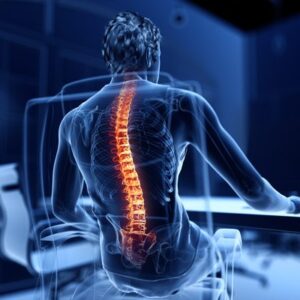
A Northbrook chiropractor explains what your MRI may mean, when disc pain can cause sciatica, and when non-surgical care may be appropriate.
If you recently had an MRI and saw the words “bulging disc,” “herniated disc,” “disc protrusion” or “disc degeneration,” it’s completely normal to feel confused or concerned.
Many people are told they have a disc issue, but they aren’t always given a clear explanation of what that diagnosis actually means. You may be dealing with lower back pain, sciatica, numbness, tingling or pain that travels into the leg or symptoms that come and go.
At Align Wellness Center in Northbrook, we often see patients who have been told they have a disc bulge or herniation but still do not fully understand why they hurt or what options they have besides waiting, medication, injections or surgery.
The good news is that a disc finding on an MRI doesn’t automatically mean you need surgery. It also does not always explain the full picture of your pain. To find out the next best step, a doctor needs to understand what the disc is doing, how it may be affecting nearby nerves and what kind of treatment approach makes sense for your specific spine.
This article explains the difference between a bulging disc and a herniated disc, why disc problems can cause symptoms like sciatica and how non-surgical treatment options may fit into a care plan for the right patient.
What Does a Spinal Disc Actually Do?
Your spine is made up of individual bones called vertebrae. Between many of these bones are spinal discs, which act like cushions or shock absorbers.
A healthy spinal disc helps:
- Absorb pressure through the spine
- Support normal movement
- Create space between the vertebrae
- Protect the nerves that exit the spine
- Help the spine bend, twist and move comfortably
Each disc has a firm outer layer and a softer center. When the spine is under too much pressure, or when the disc begins to weaken over time, that disc can bulge, herniate, or become inflamed, which may irritate nearby spinal nerves.
Bulging Disc vs. Herniated Disc: What’s the Difference?
A bulging disc and a herniated disc are related, but they aren’t the same thing. Both involve a spinal disc moving outside its normal position, but the way that happens is different.
- A bulging disc means the disc is pushing outward beyond its usual shape.
- A herniated disc means the inner material of the disc has pushed through a weakened or torn area in the outer layer.
With a bulging disc, the outside of the disc is still intact. The disc may spread or protrude into the space around the spine, which can sometimes irritate nearby nerves.
With a herniated disc, the softer material inside the disc breaks through the outer layer. This is why some MRI reports may use terms like “disc herniation,” “disc protrusion,” “ruptured disc” or “slipped disc.”
A small disc issue can cause major symptoms if it irritates a nerve, while a larger-looking disc finding may cause very little pain in some people. Your symptoms, exam findings and overall spinal structure matter just as much as the words on the MRI report.

Why Disc Problems Can Cause Back Pain, Sciatica, Numbness or Tingling
A disc issue becomes more concerning when it affects nearby nerves. In the lower back, irritated nerves can cause symptoms like:
- Lower back pain
- Pain that travels into the buttock, hip, leg or foot
- Sciatica
- Numbness or tingling
- Burning, shooting or electric-like pain
- Muscle weakness
- Pain that gets worse with sitting, bending or lifting
Disc problems can also happen in the neck, although the symptoms usually show up in different areas. When a cervical disc irritates a nerve, pain, numbness or tingling may travel into the shoulder, arm, hand or fingers.
Disc problems are only one possible contributor to neck discomfort, though. If your symptoms improve and then return, learn more about why neck pain may keep coming back and the other factors that may be involved.
What Makes Disc-Related Pain Worse
Disc-related pain often becomes worse when the spine is repeatedly compressed or placed under stress.
Common triggers include:
- Sitting for long periods
- Bending forward repeatedly
- Lifting with poor form
- Twisting while carrying weight
- Poor posture
- Weak core support
- Repetitive strain
- Sleeping in positions that irritate the spine
- Returning to activity too quickly after a flare-up
Many people notice that their symptoms are worse after sitting at a desk, driving, lifting children, doing yard work or getting out of bed in the morning.
Which doesn’t mean you should avoid movement forever. In many cases, the right type of movement is important. However, it does mean your spine may need a more specific plan than “just stretch” or “just rest.”
Why Your MRI Findings May Not Match Your Symptoms
One of the most confusing parts of disc-related pain is that MRI findings don’t always match how a person feels. Some people have disc bulges or disc degeneration on imaging with very little pain. Others have smaller-looking disc findings but significant nerve irritation and daily symptoms.
This can happen for a few reasons:
- Disc changes are common over time: Some disc changes may be related to aging or wear and tear, and they do not always cause pain on their own.
- Location matters: A small disc issue can cause major symptoms if it irritates the wrong nerve, while a larger-looking disc finding may cause little pain if it is not pressing on or irritating sensitive structures.
- Inflammation can affect symptoms: Pain is not always caused by pressure alone. Irritation and inflammation around a nerve can also contribute to pain, tingling or burning sensations.
- Your movement patterns matter: Sitting, bending, lifting, posture and repeated strain can make symptoms worse, even if the MRI finding itself has not changed.
- Pain can come from more than one source: Muscles, joints, nerves, posture and spinal mechanics can all contribute to how you feel.
That’s why an MRI can be helpful, but it should not be the only thing used to decide what care you need. The goal is to understand how the disc finding relates to your symptoms, movement and overall spinal health.
Non-Surgical Treatment Options for Bulging and Herniated Discs
After seeing “bulging disc” or “herniated disc” on an MRI, you may be worried surgery could be next. In many cases though, people with disc-related pain are able to start with conservative, non-surgical care.
The right approach depends on what is causing your symptoms, how irritated the nerves are and whether your condition is improving or getting worse.
Here are some common non-surgical options:
| Treatment | What It May Help With | Main Goal |
|---|---|---|
| Spinal decompression | Disc pressure, sciatica or nerve irritation | Gently reduce pressure around the affected area |
| Corrective chiropractic care | Poor spinal mechanics, posture stress or restricted movement | Improve alignment, movement and spinal function |
| SoftWave therapy | Muscle guarding, soft tissue irritation or inflammation | Support irritated soft tissue around the painful area |
| Home care recommendations | Flare-ups from sitting, lifting, sleeping or daily habits | Help you avoid movements that keep irritating the disc |
Every treatment plan may not work for every patient. The goal is to understand what your body needs and choose the safest next step. Non-surgical care may be a reasonable place to start when symptoms are stable and there are no serious warning signs.
When Should You Seek Urgent Medical Care or a Surgical Opinion?
Some symptoms should not be ignored, and you should seek urgent medical care right away if you experience:
- Loss of bladder or bowel control
- Numbness in the groin or saddle area
- Severe or worsening leg weakness
- Difficulty standing or walking
- Rapidly worsening neurological symptoms
- Severe pain after a major fall, accident or injury
These symptoms may indicate a more serious condition and should be evaluated immediately.
You may also need a surgical opinion if you have progressive weakness, severe nerve compression or symptoms that do not improve with conservative care.
How a Chiropractor Evaluates Disc-Related Pain
If you have lower back pain, sciatica, numbness, tingling or an MRI report that mentions a bulging or herniated disc, a chiropractic evaluation can help determine whether the disc finding may be related to your symptoms.
A chiropractor may look at:
- Your symptom pattern: Where the pain is located, whether it travels into the arms or legs and whether you feel numbness, tingling, weakness, burning or shooting pain.
- Your movement triggers: Whether sitting, bending, lifting, twisting, driving or certain sleeping positions make symptoms better or worse.
- Nerve-related signs: Whether nearby nerves appear irritated or compressed based on your symptoms and exam findings.
- Spinal movement and mechanics: Whether restricted movement, joint stress, posture or repeated strain may be contributing to the problem.
- Your imaging in context: What the MRI shows, what it does not show and how those findings compare with your actual symptoms.
All this information helps the provider understand whether the disc finding is actually related to your pain and what type of care may be appropriate.
How Align Wellness Center Builds a Disc Care Plan in Northbrook
At Align Wellness Center in Northbrook, we evaluate disc-related pain by looking at more than the MRI report alone. We want to understand where your pain is coming from, how it is affecting your daily life and whether non-surgical care may be appropriate.
One part of our approach is Chiropractic BioPhysics, or CBP. CBP is a corrective chiropractic approach that looks at spinal structure, posture and movement patterns instead of only focusing on short-term pain relief. For disc-related cases, this helps us understand whether certain areas of the spine may be under repeated stress and whether that stress could be contributing to recurring symptoms.
Your visit may include:
- A conversation about your symptoms: We will talk through where you feel pain, how long it has been happening, what makes it better or worse and whether symptoms travel into the arms or legs.
- A review of your health history and imaging: If you have an MRI or previous diagnosis, we can review those findings with you and explain what they may mean in plain language.
- Orthopedic, neurological and movement testing: These tests help us better understand whether your symptoms may be related to disc irritation, nerve involvement, posture, joint restriction or movement patterns.
- 3D BioStructural Analysis: This helps us evaluate how your posture and spinal structure may be placing stress on the affected area.
- A personalized care plan: If we believe we can help, we will explain your options. Your plan may include corrective chiropractic care, spinal decompression, SoftWave therapy, home recommendations or a combination of approaches.
- Progress checkpoints: Disc-related symptoms can change over time, so we monitor how your pain, mobility, nerve symptoms and daily function respond to care.
If you’re worried about a bulging disc, herniated disc or disc-related sciatica, call Align Wellness Center at (847) 564-9500 or schedule an appointment online. Our office is located at 666 Dundee Rd #401 Northbrook, IL 60062.
Frequently Asked Questions About Bulging Discs, Herniated Discs and Non-Surgical Treatment
Is a bulging disc the same as a herniated disc?
No. A bulging disc means the disc is pushing outward beyond its normal shape. A herniated disc means the inner disc material has pushed through a weakened or torn part of the outer layer. Both can irritate nearby nerves, but they are not exactly the same condition.
Is a herniated disc worse than a bulging disc?
A herniated disc is not automatically “worse” than a bulging disc. What matters most is whether the disc is irritating a nearby nerve, how severe your symptoms are and whether you have numbness, tingling, weakness or pain traveling into the leg. Some bulging discs are very painful, while some herniated discs cause minimal symptoms.
Can a bulging disc cause sciatica?
Yes. A bulging disc in the lower back can irritate or compress nerves that travel into the leg. This can cause sciatica, which may feel like shooting pain, burning, numbness, tingling or weakness down the buttock, leg or foot.
Can chiropractic care help a bulging or herniated disc?
Chiropractic care can help the right patient by improving spinal mechanics, reducing stress on irritated areas and supporting better movement. At Align Wellness Center, we evaluate each patient first to determine whether chiropractic care, decompression or another approach is appropriate.
What does spinal decompression do for a disc problem?
Non-surgical spinal decompression gently reduces pressure through targeted areas of the spine. For some patients, this may help reduce mechanical stress around an irritated disc or nerve. It isn’t right for every case, which is why a proper evaluation is important.
Will SoftWave therapy fix a herniated disc?
SoftWave therapy does not “fix” or reverse a herniated disc. It may be used to support irritated or inflamed soft tissue that is contributing to pain. For disc-related cases, it is typically considered as part of a broader care plan rather than a standalone solution.
Do I need surgery for a herniated disc?
Not always. Many people with disc-related pain improve with conservative treatment. However, surgery may be necessary in certain cases, especially if there is severe or worsening weakness, loss of bladder or bowel control, difficulty walking or symptoms that do not improve with appropriate care.
When should I worry about a bulging or herniated disc?
You should seek urgent medical care if you have loss of bladder or bowel control, numbness in the groin or saddle area, severe leg weakness, difficulty walking or rapidly worsening neurological symptoms. These signs may indicate a serious condition that needs immediate evaluation.
Can a herniated disc heal without surgery?
Yes, herniated discs can improve without surgery. In some cases, symptoms calm down as inflammation decreases, pressure around the nerve improves and the body adapts over time. However, healing depends on the severity of the herniation, whether a nerve is irritated and whether symptoms are improving or getting worse.
How long does non-surgical disc treatment take?
The timeline depends on your symptoms, the severity of the disc issue and how your body responds to care. Some people notice improvement within a few weeks, while others may need a longer care plan, especially if they have recurring pain, sciatica, numbness, tingling or posture-related stress contributing to the problem.
At Align Wellness Center, progress is monitored over time so your care plan can be adjusted based on your pain levels, mobility, nerve symptoms and daily function.
Can you have a bulging or herniated disc without pain?
Yes, some people have a bulging or herniated disc without any noticeable symptoms, and the disc change may only be discovered on an MRI. Whether a disc causes pain often depends on its location, whether it irritates a nearby nerve and how the finding relates to your overall symptoms and exam.
 (847) 564-9500